
End-to-end analytics: ads → leads → qualification → sales
End-to-end analytics: ads → leads → qualification → sales
One chain of numbers from ad spend to closed deals — where each metric lives, which one actually matters, and how to pull all of it by asking
Agencies rarely lose clients because the ads were bad. They lose clients because nobody could prove the ads were good. Ads Manager stops counting at the click, the client’s sales team starts counting at the deal, and everything in between — the conversations, the qualification, the leads that quietly died — lives in nobody’s report. End-to-end analytics closes that gap: one chain of numbers from the first impression to the closed sale, so every campaign decision and every client call runs on evidence.
One funnel, two sources of truth
A click-to-WhatsApp funnel produces numbers in two places, and a good agency reads both:
- Meta Ads Manager owns everything up to the click — spend, impressions, CPM, CTR, cost per messaging conversation started. This is where media buying gets judged.
- Chatfuel owns everything after the click — every conversation, what the lead said, whether they qualified, which stage they reached on the Leads board, and how the deal ended. This is where the business result gets judged.
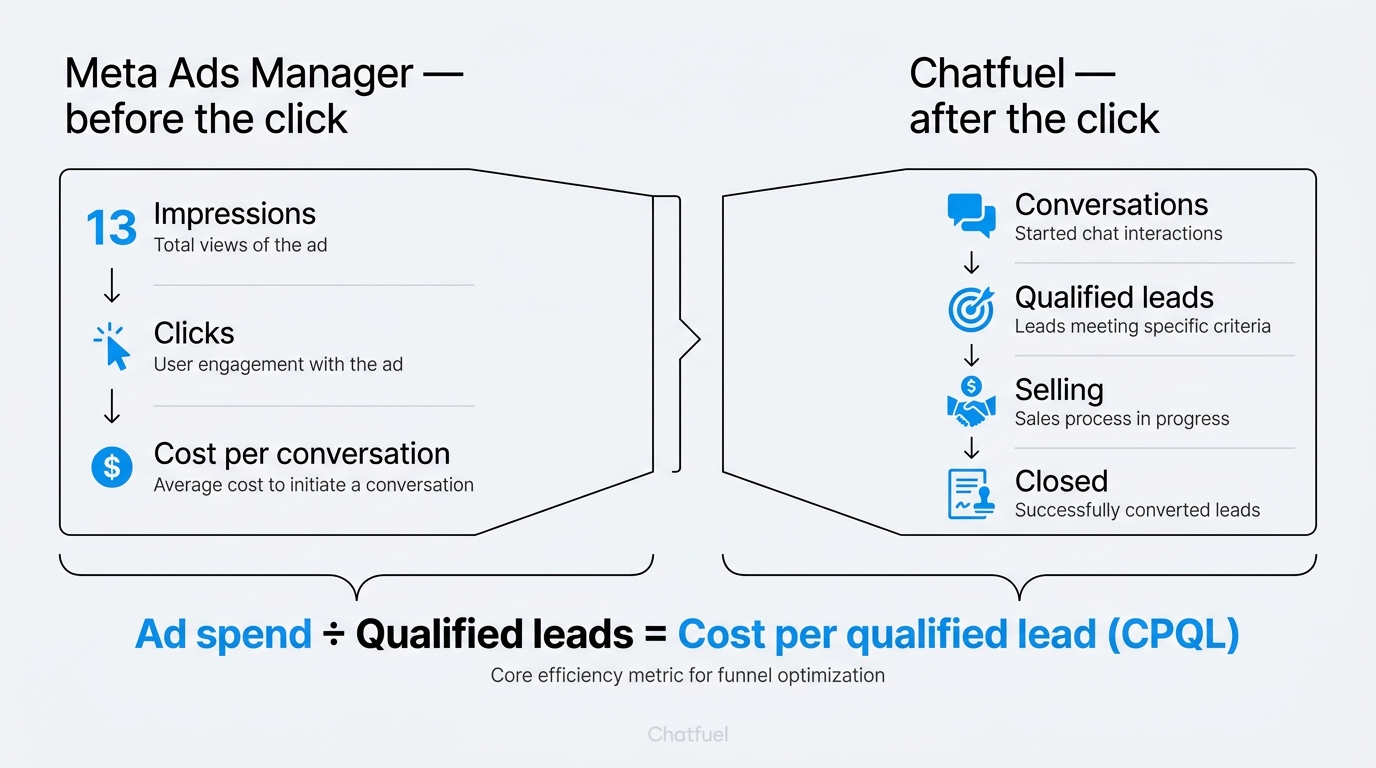
The join between the two is simple arithmetic you’ll do weekly: take spend from Ads Manager, divide by the qualified-lead and closed-deal counts from Chatfuel, and you get the numbers Ads Manager alone can never show — cost per qualified lead and cost per sale.
The metric ladder
Every step down the ladder gets closer to money — and further from what Ads Manager reports on its own:
The top of the ladder is diagnostics; the bottom is what the client pays for. A report built only from the top two rows is a vanity report — and clients can smell it.
The number that matters: cost per qualified lead
Meta’s delivery system optimizes toward cheap conversations started — that’s what it can see. But a conversation isn’t a lead: it might be a competitor snooping on prices, a bargain hunter, or a bare “Hi” that goes silent. The metric that should drive every kill-or-scale decision is cost per qualified lead — spend divided by the conversations your qualification bot actually marked as qualified.
The two metrics regularly disagree, and that’s the whole point: an ad set with the cheapest conversations and a 10% qualification rate is more expensive per real lead than one with pricier conversations and a 40% rate. Judge ads where Chatfuel’s data starts, not where Meta’s ends — the full playbook is in Lead quality and cost per qualified lead.
Pull it by asking
None of this requires exporting spreadsheets or building dashboards. The AI Co-Worker is the analyst: open the client’s company and ask — “show conversion funnel”, “new leads this month”, “business report” — and it answers from that client’s real conversations and pipeline, with recommendations attached. The full tour of what you can ask is in Any report by asking the AI Co-Worker.
The Leads board is the skeleton of every report
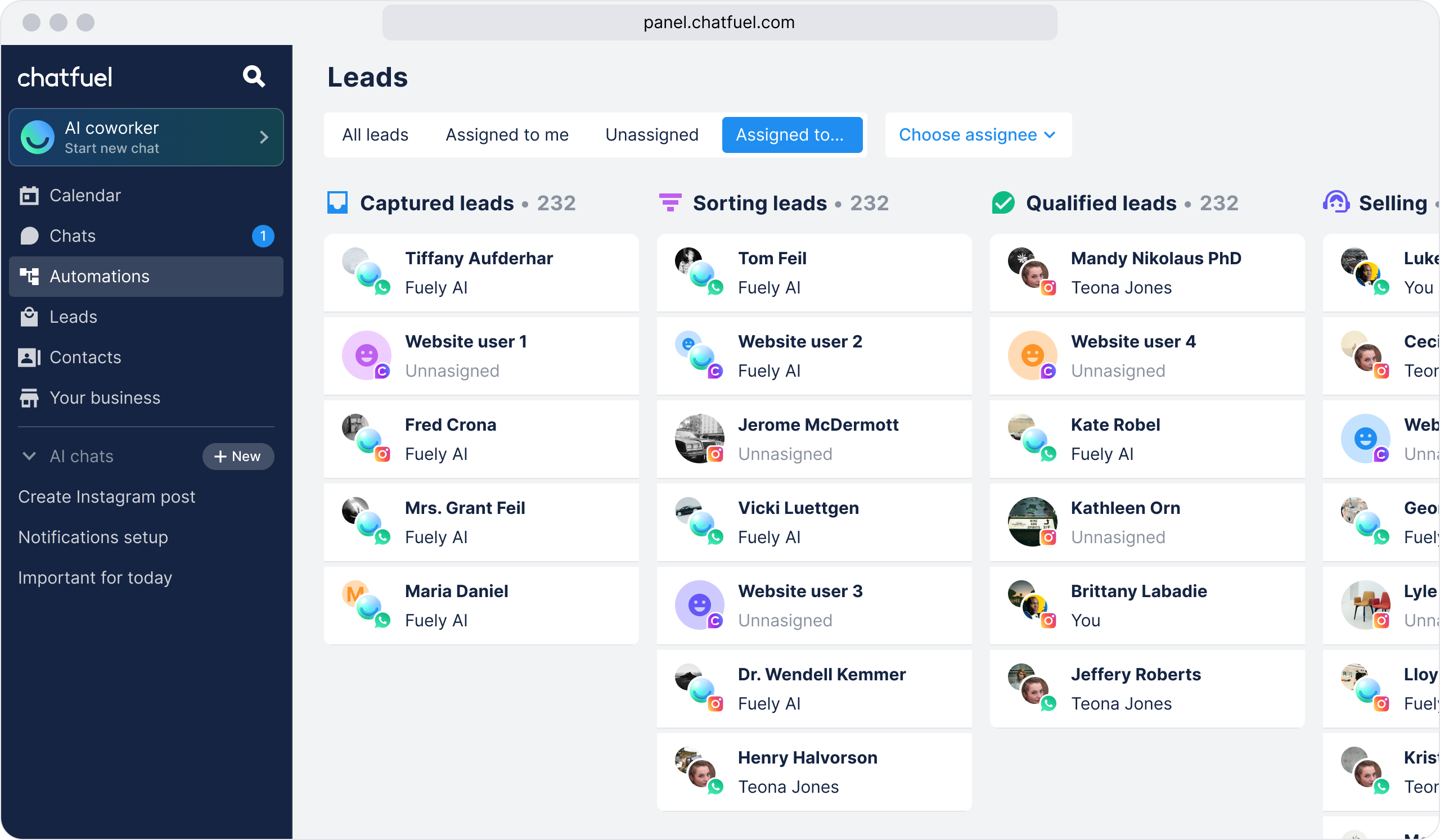
Every metric below the click hangs on the lead stages: leads are captured, sorted, qualified, moved to selling, and closed as won or lost — and the bot moves them automatically as conversations progress. That means the funnel report builds itself while the bot works; nobody on your team fills in a CRM by hand.
Where to next
The full menu of questions your in-chat analyst can answer.
Find the stage where your funnel leaks — and whose job it is to fix it.
The metric that should drive every budget decision.
Turn these numbers into the report clients renew for.