
Speed to lead: winning the first five minutes
Speed to lead: winning the first five minutes
Respond within an hour and you’re 7× more likely to qualify the lead; wait a day and the deal is someone else’s — the metric agencies win on before any targeting genius
A Harvard Business Review study of over a million sales leads found that companies responding within an hour were about 7× more likely to qualify the lead than those who waited even an hour more — and 60× more likely than those who took a day. The famous industry follow-up is blunter still: contact a lead in the first 5 minutes versus 30, and your odds of qualifying them are roughly 21× better. Speed to lead is the least glamorous metric in marketing and the one with the most leverage per dollar — because most of the market is losing at it badly.
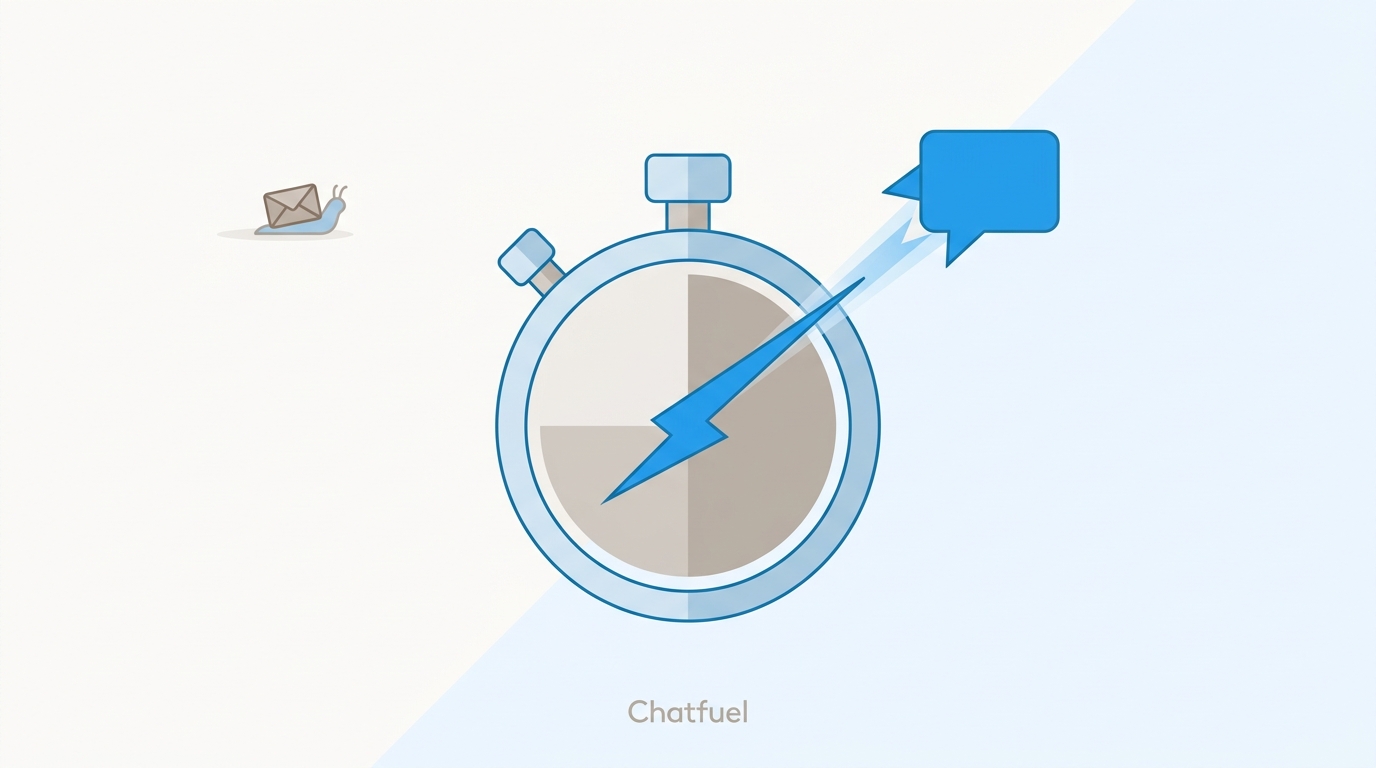
Why minutes decide
A lead who taps a WhatsApp ad is at peak intent right now — comparing options, phone in hand. Every minute of silence, that intent decays: they message a competitor, the moment passes, dinner happens. Industry estimates put the average business response time at nearly two days, suggest that most leads are never followed up at all, and hold that the majority of buyers go with whoever answered first. Nobody’s benchmarks are precise here, but the direction is unanimous and brutal: the fastest responder captures a wildly outsized share of the deals — often with a worse product and a smaller budget.
For an agency the implication is uncomfortable: you can win the auction, the creative, and the click, then lose the sale in the gap between “conversation started” and “someone replied.”
Chatfuel’s answer: seconds, 24/7
This is the metric Chatfuel simply deletes. The qualification bot answers in seconds — not “within business hours,” not “as soon as a rep is free.” At 11 p.m. on a Sunday, after hours and on holidays, during lunch — the lead from your ad gets greeted, interviewed, and qualified while your competitor’s inquiry sits unread in a shared inbox. By the time a human sales rep would have typed “Hello!”, the Chatfuel lead has already answered the budget question.
Run the numbers against the research above and this is the single biggest performance upgrade most funnels can buy: the same ads, the same spend, and every lead handled inside the window where they’re 21× more likely to qualify. Your media buying doesn’t have to beat competitors by much when your response time beats them by 47 hours.
What to watch weekly
Automation wins the first five minutes; the watch-list keeps the next days honest:
- Qualified leads sitting in the pipeline. The bot’s speed is wasted if qualified leads wait two days for the client’s sales team. The funnel report shows leads piling up between qualified and selling — that pile is a speed problem wearing a different hat.
- “Clients at risk” — the Co-Worker flags leads with no response for days or stuck at the same stage, before they’re lost instead of after.
- “Who went silent” — the re-engagement list: leads who showed intent and faded, sorted for follow-up.
Ask weekly, forward the list to the client’s team, and note who acted on it — that log settles the “whose leads leak” conversation before it starts.
Sell the speed
Speed to lead belongs in your pitch and your monthly report, not just your ops. In the pitch: “your leads currently wait hours; with us they wait seconds — and here’s the research on what that’s worth.” In the report: response time is the rare metric that’s dramatic, client-legible, and yours — the client’s last agency reported CTR; you report “every one of your 214 leads this month was answered within seconds, including the 61 that arrived outside business hours.”
Test it like a lead
Once a month, tap the client’s live ad yourself at an inconvenient hour and time the reply. Thirty seconds of testing catches a disconnected channel or a sleeping bot faster than any dashboard — and hands you a screenshot for the client report: 11:47 p.m., answered in 4 seconds.
Where to next
The setup that keeps response time flat around the clock.
Where slow handoffs show up as a stage-to-stage leak.
The at-risk and gone-silent lists, one question away.
The full ads-to-WhatsApp pipeline this speed advantage powers.