
AI copy and hooks for the niche
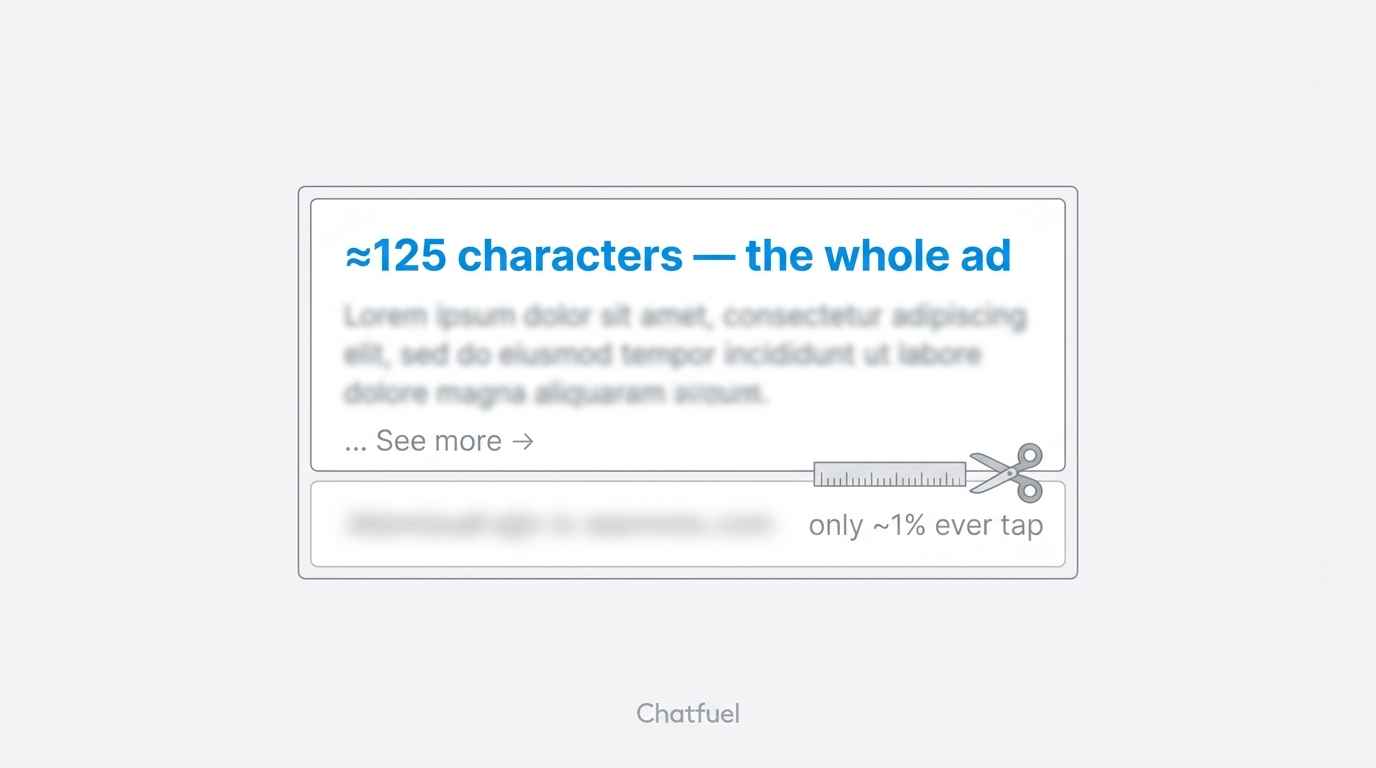
Only about 1% of people tap ‘See more’ — the first line of your ad is the whole ad. Here are the hook formulas that earn the click, niche by niche
Meta truncates primary text after roughly 125 characters, and only about one viewer in a hundred ever expands it. Whatever you wrote below the fold, the feed never saw it. That makes ad copy a game of first lines: the hook either stops the thumb in the first second or the impression is wasted. Great news for agencies — hooks are not magic, they’re formulas, and the formulas are learnable.
Hook formulas that work
The proven openers, with the pattern behind each:
Two crafting rules on top of any formula: put a concrete specific in the first line (a number, a price, a named outcome — specifics read as truth, adjectives read as advertising), and write the way people type in a chat, not the way brands write press releases. Emojis help when they structure the text — one to three per ad, used as visual anchors, is the sweet spot media buyers converge on; a wall of them reads as spam.
Hooks by niche
The same four verticals we use across the Academy, with the angle that works and the trap to avoid:
Copy for click-to-WhatsApp ads
A click-to-WhatsApp ad doesn’t send people to a landing page — it opens a chat. The copy has to set up that moment, and most of what makes these ads underperform is copy written as if a website were coming:
- Promise the chat. Tell the lead exactly what happens after the tap: “Message us and get the price list in a minute.” People who expect a conversation start one; people who expected a website close the chat.
- Match the CTA to the action. “Send Message” converts; “Learn More” on a chat ad confuses — the button must describe what the thumb is about to do.
- Make the pre-filled first message work. The message a lead sends when the chat opens is a targeting tool: pre-fill “Hi! I’d like the July price for a studio” instead of a bare “Hi” and the qualification bot starts with the lead’s intent already on the table.
- Give Meta variants to optimize. Upload 3–5 different primary texts per ad — vary the actual hook (question vs. statement, short vs. story), not just the wording. Meta’s delivery system rewards the variety.
- Length follows temperature. Retargeting a warm audience? Short and direct. Cold traffic on a considered purchase? A longer, story-driven text can qualify harder — a slightly lower CTR with better leads is a win, because the metric that pays your retainer is cost per qualified conversation, not clicks.
Mistakes that kill conversions
- The hook lives after “See more.” Front-load: if the first 125 characters don’t sell, nothing does.
- Features instead of pain. “AI-powered omnichannel platform” stops no thumbs. “Stop losing the leads who message at midnight” does.
- “You”-statements that imply personal attributes. “Are you diabetic?”, “Struggling with debt?” — Meta rejects copy that implies it knows something personal about the viewer. Rewrite in third person: “the program diabetics ask their doctors about.” Details in Moderation in Meta.
- Optimizing for CTR alone. Clickbait buys cheap clicks and expensive silence in WhatsApp. Judge copy by qualified conversations.
- One variant, forever. Hooks fatigue. The winning ad of June is wallpaper by August — keep a rotation.
You don't write these by hand
These formulas are wired into Chatfuel’s creative generation: when the AI Co-Worker drafts an ad, it builds the headline from this same playbook — ten words max, one concrete specific, a named hook formula behind it — and shows you the text for approval before rendering. Your job shifts from writing hooks to choosing between good ones.
Where to next
Turn the approved hook into a finished, scroll-stopping visual.
The copy rules that keep these hooks from getting rejected.
What happens after the hook works and the chat opens.
The full ads-to-WhatsApp pipeline this copy feeds.