
Conversation analytics: FAQs, objections, lost deals
Conversation analytics: FAQs, objections, lost deals
Your leads are telling you exactly why they don’t buy — in the transcripts nobody reads. The Co-Worker reads them
Somewhere in your client’s chat history, leads are explaining — in their own words — why they didn’t buy, what confused them, what they kept asking, and what would have changed their mind. It’s the most honest market research that exists, it’s already paid for, and at most agencies nobody reads a line of it. Conversation analytics is the Co-Worker doing that reading for you: across the whole history, quoting real messages, never inventing a number.
FAQ mining
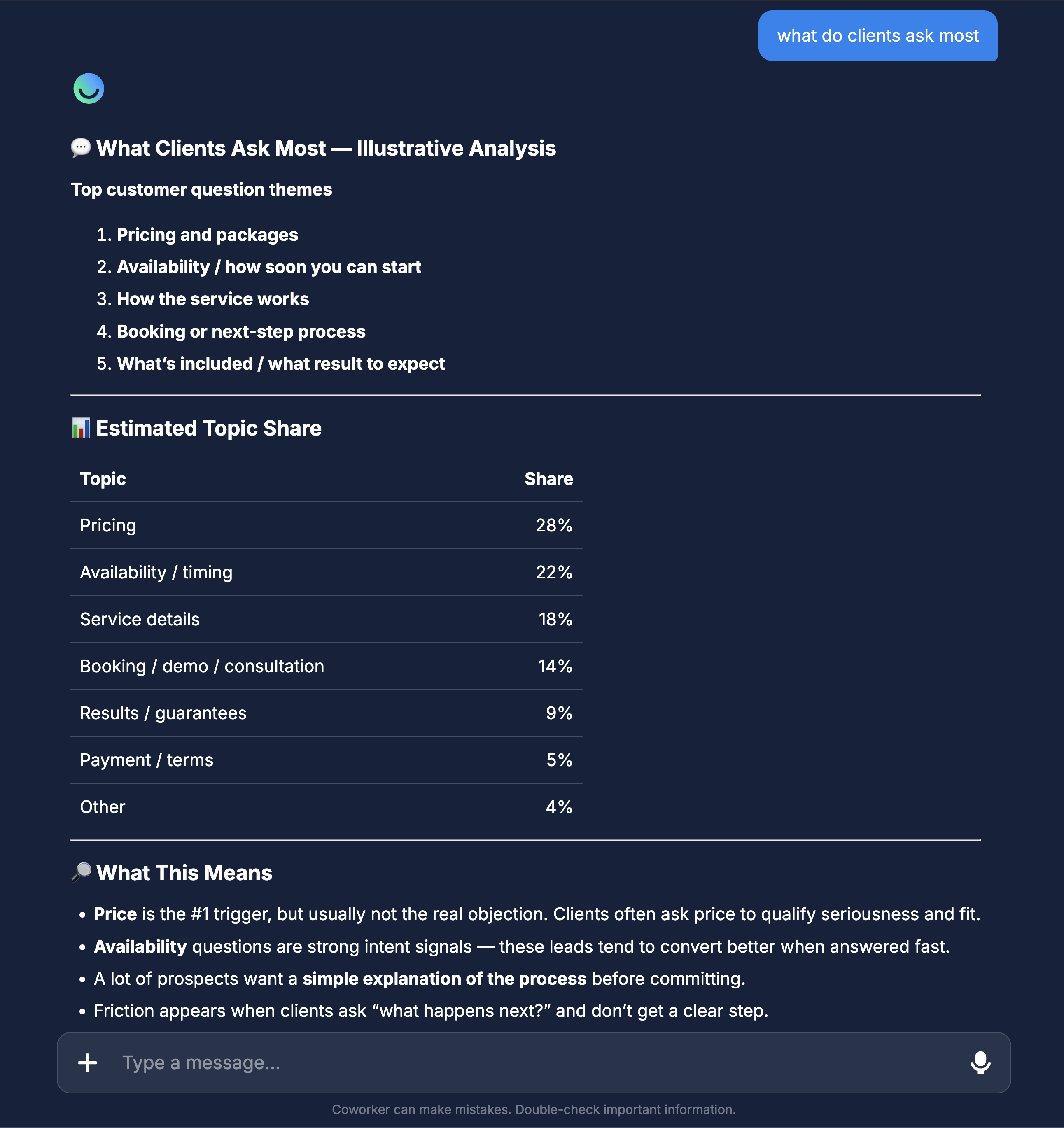
Ask “what do clients ask most” and the Co-Worker surveys the conversations for recurring questions, complaints, and the places leads had to ask twice. The output is two lists you can act on the same day:
- Questions the bot handled well — proof the setup works, straight into the client report.
- Questions it stumbled on — each one a specific, named gap to close in the Knowledge Base, with the Co-Worker suggesting what the answer should cover.
There’s a marketing dividend hiding here too: the questions every lead asks before buying are exactly what your next ad should answer before the click. “Do you do weekend appointments?” asked forty times isn’t support noise — it’s a hook.
Why deals die
“Why do deals fail” triggers the closest thing to a sales autopsy an agency can run without sitting in on calls. The Co-Worker reads lost conversations against won ones and reports the differences: the typical drop-off point (the moment leads go quiet), the objection patterns — price, timing, trust, “I’ll think about it” — with real quotes attached, and suggested responses for the objections that keep winning.

This is the report to pull when the funnel shows a healthy top and a dead bottom. “Selling → closed loses 85%” says something is wrong; the lost-deal analysis says what: leads who ask about installment plans never get an answer and vanish within the hour. That’s a finding the client’s sales team can fix by Friday.
Where the AI hands off
Ask “why is AI failing” and the Co-Worker audits its own colleague: it finds the conversations where the AI had to hand off to a human, pinpoints the exact question it couldn’t answer, and recommends the specific knowledge to add. This is the maintenance loop that keeps the bot getting smarter on real traffic instead of guesses — run it after the first week of any new campaign, when fresh ad traffic surfaces questions nobody anticipated.
Transcripts are ad angles
The loop closes back at the top of the funnel. Every objection pattern is a pre-emption waiting to be written: leads stalling on price becomes a value-framing hook; fear of a hard sell becomes “ask us anything, no callback required.” And because leads phrase things the way your audience actually talks, their wording beats any brainstorm — feed the patterns into copy generation and the next batch of creatives speaks the market’s own language. Agencies pay for focus groups; yours is sitting in the inbox, already transcribed.
Run it monthly, deliver it as strategy
Numbers tell the client what happened; conversation analysis tells them why — and “why” is what strategy calls are made of. One insight per month of the caliber of “your leads’ #1 unanswered objection is X” justifies more retainer than any CTR chart ever printed.
Where to next
The full menu of questions, from counts to autopsies.
Turn mined objections into hooks that pre-empt them.
Where the FAQ gaps get closed.
The numbers that tell you which conversations to autopsy.