
How the funnel works: ads → bot → qualification → lead
How the funnel works: ads → bot → qualification → lead
Nobody pays an agency for clicks. You get judged on what happens after the click — and that’s exactly the part most ad accounts leave to chance: the lead messages the client, nobody answers fast enough, nobody asks the qualifying questions, and the sale quietly dies in an unread chat.
Every Chatfuel setup is built around one machine that closes that gap: ad → conversation → qualification → qualified lead. Learn it once, and you can replicate it for every client you onboard.
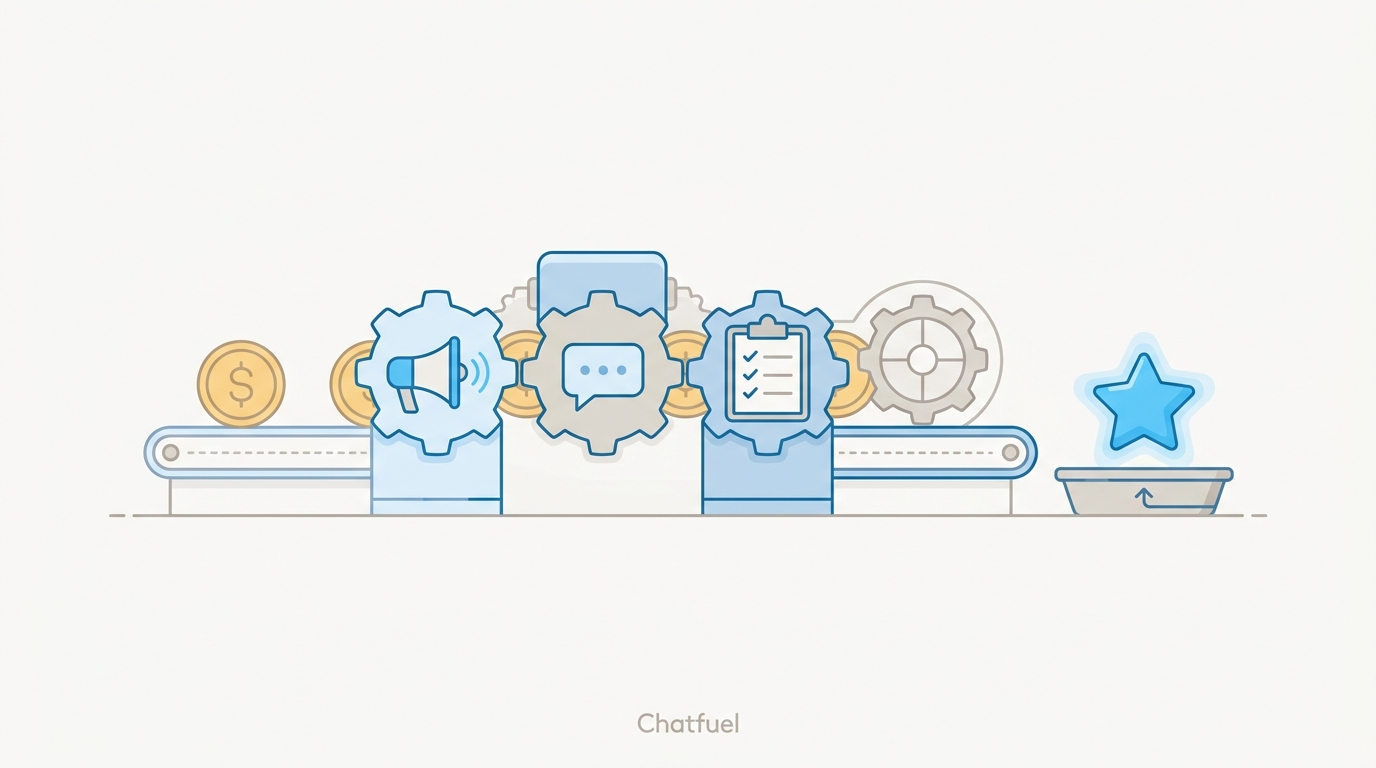
The funnel at a glance
- Ad — a click-to-WhatsApp or Instagram campaign drops the person straight into a chat. No landing page, no form.
- Bot — the AI answers within seconds, any hour, and keeps the conversation going.
- Qualification — the AI asks the qualifying questions and moves each contact through a pipeline automatically.
- Lead — a qualified contact lands with your client’s sales team, hits their CRM, and fires a signal back to Meta.
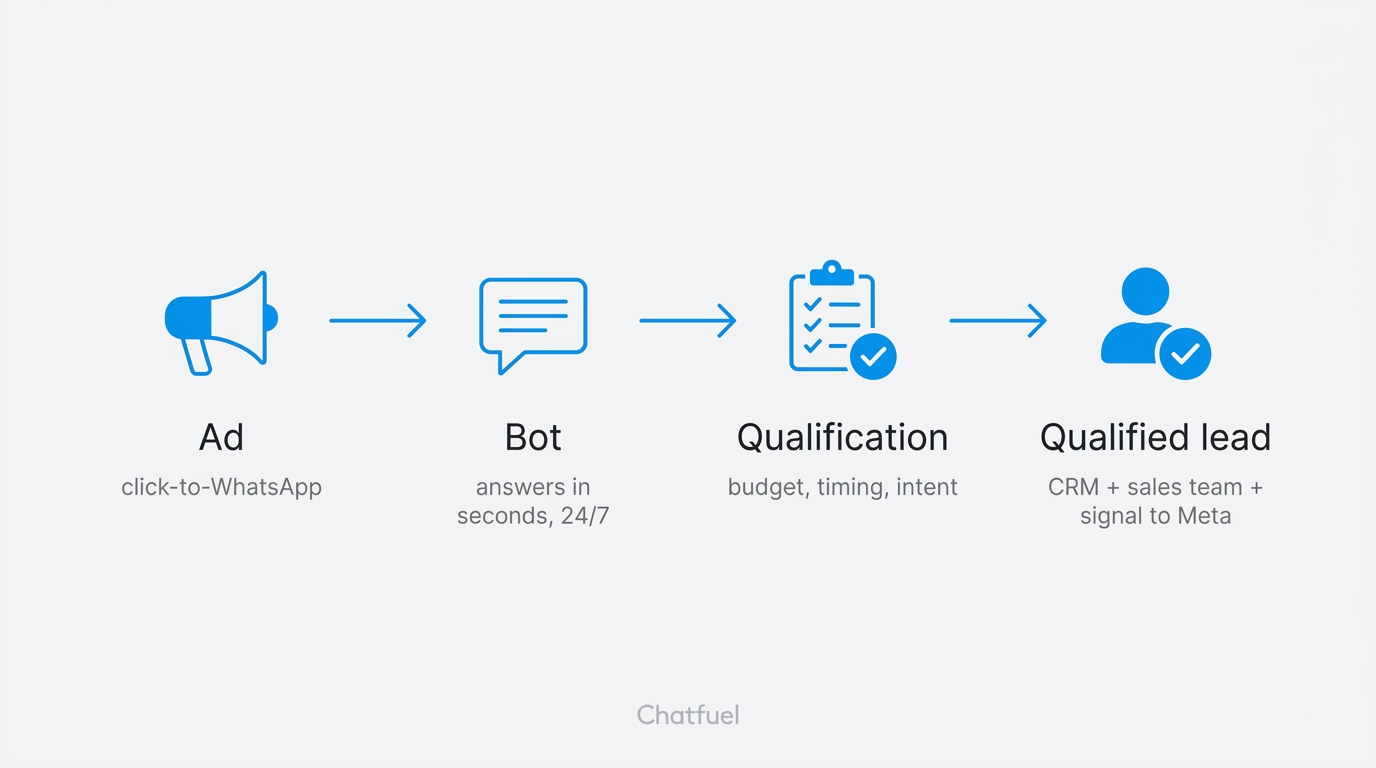
Each handoff between stages is where money usually leaks — slow replies, unqualified contacts, deals lost to silence. The rest of this guide shows how each stage plugs that leak.
Stage 1: The ad starts a conversation
In Ads Manager, you build a campaign with Messaging apps as the conversion destination and the client’s WhatsApp number (or Instagram account) as the endpoint. When someone taps the ad, their messaging app opens with a chat already started — the chat is the landing page.
A detail worth getting right is the pre-filled message: the text that appears in the person’s chat window when they tap the ad, set in the ad’s message template. It removes the “what do I even write?” friction — the lead just hits send, and the conversation is on.
Stage 2: The bot picks up instantly
The moment the lead’s first message arrives, the AI replies — within seconds, at 2 pm or 2 am. It answers from the knowledge base you loaded with the client’s business: what they sell, at what price, when they’re open, what customers usually ask.
Running several offers for one client? Point each campaign at its own conversation. You specify the ad ID in Chatfuel, and leads from different ads get handled differently:
Leads from an ad without its own path — or people who message the number directly — are still handled by the AI from the knowledge base. Nothing falls through.
Stage 3: Qualification happens in the chat
While the conversation flows, the AI is doing the work your client’s sales team never has time for: asking the qualifying questions — what the person needs, when, at what budget — and sorting contacts on a pipeline board automatically:
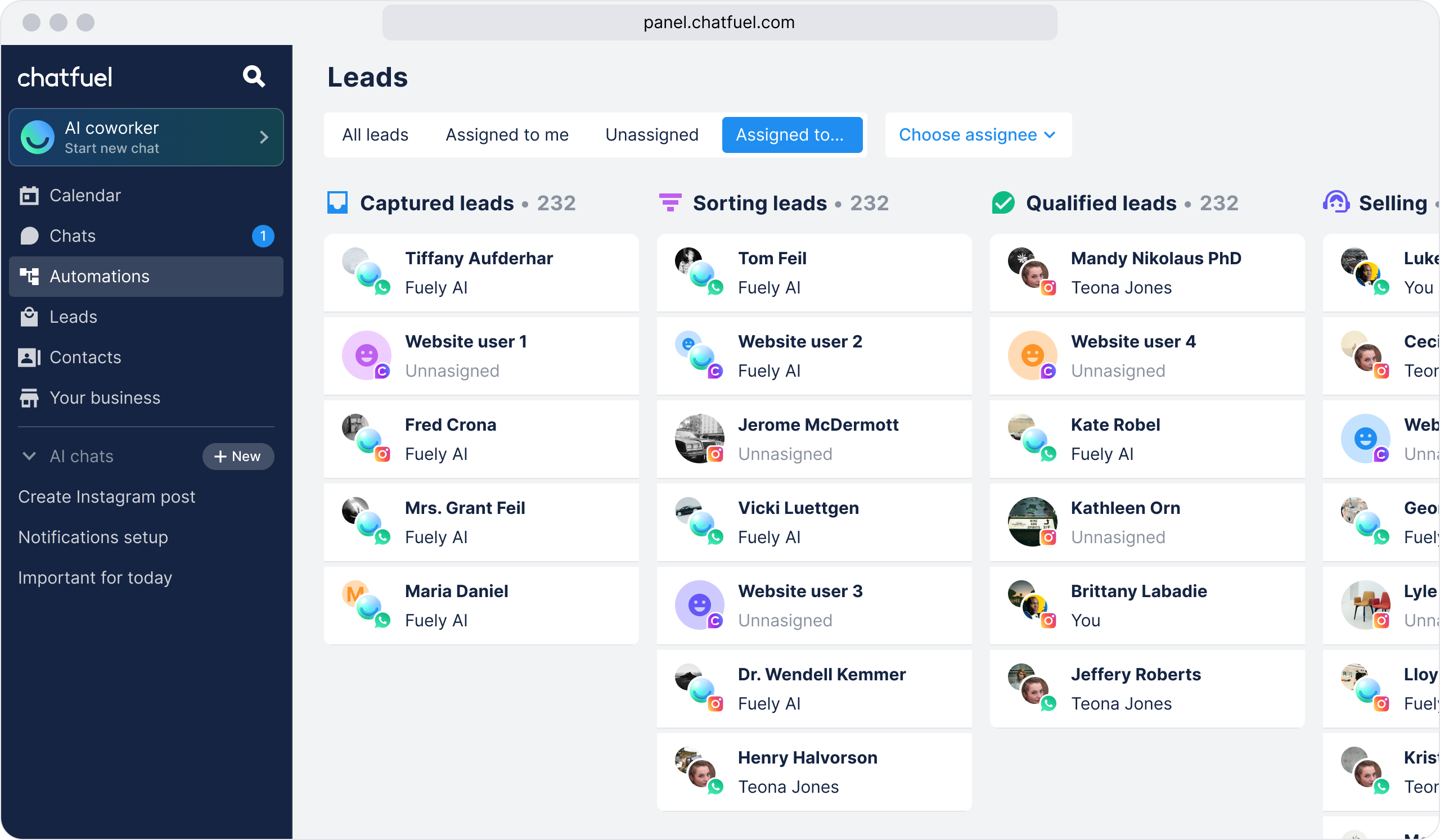
These three stages run on autopilot. No agency-side manual work — the pipeline fills itself while the campaign runs.
Stage 4: A qualified lead lands with the client
When a contact hits Qualified, three things happen:
- Meta gets the signal. The qualified-lead event goes back to Meta through the Conversions API (CAPI), so the campaign optimizes toward people who qualify — not just people who click or start a chat.
- The client’s tools get the lead. Name, phone, and the answers from the chat are pushed to the client’s CRM or a Google Sheet — wherever their sales team actually works.
- A human takes over. The client’s team picks the lead from Qualified, moves it to Selling, and closes the deal — with the full chat history attached, so nobody asks the lead the same questions twice.
Why this funnel protects the agency
- You hand over only real leads. The client’s sales team gets contacts that answered qualifying questions — intent, timing, budget — not a raw dump of everyone who tapped an ad. The “your leads are trash” conversation stops happening.
- Your results don’t die on the client’s sales floor. Qualification, follow-ups, and CAPI events all fire before the lead reaches the client’s team — weak sales on their side can’t erase the conversions your ads actually produced.
- You own the proof. Every stage is visible on the pipeline board: conversations → qualified → closed. When it’s time to defend the retainer, you report qualified leads and cost per qualified lead, not vanity metrics.
- The algorithm works for you. Because CAPI feeds Meta qualified-lead events, optimization compounds toward lead quality — over time you pay less per qualified lead, not just less per click.